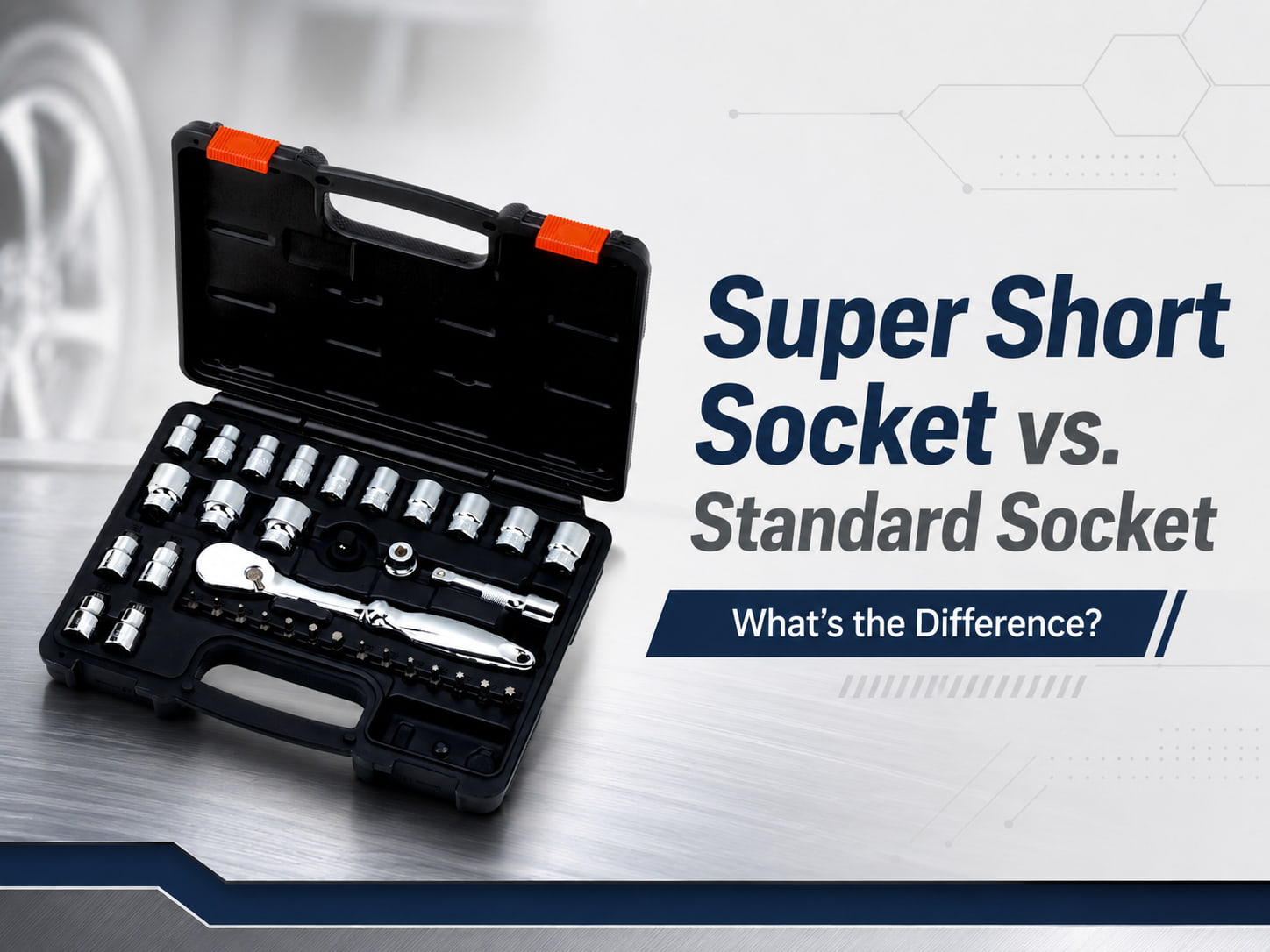
When technicians choose a socket for a repair job, the decision is often based on size, drive type, and access. But in modern maintenance work—especially in automotive, motorcycle, and industrial service—socket height and overall tool profile can be just as important as strength. That is where the comparison between a super short socket and a standard socket becomes highly relevant.
At ACT Quality Industrial Co., Ltd. (ACT TOOLS), we develop compact fastening solutions for professionals who work in tight spaces and demand both torque performance and efficiency. Understanding the difference between these two socket types helps users choose the right tool for the right job.
A Quick Look Back: What Is a Super Short Socket?
We introduced the full concept in our previous article, What Is a Super Short Socket and When Should You Use It?. In short, a super short socket—also called a low profile socket—is designed to reduce overall height and improve access in confined working areas.
In this article, we will not repeat the full definition. Instead, we will focus on the practical comparison: how a super short socket differs from a standard socket in real service work.
What Is a Standard Socket?
A standard socket is the most common type of socket used in workshops and tool kits. It is designed to fit onto a ratchet, breaker bar, or extension and provide solid engagement with nuts and bolts in a wide range of fastening applications.
Standard sockets remain popular because they offer:
- familiar dimensions
- broad size availability
- strong compatibility with common hand tools
- good performance in general service work
For many everyday repairs, a standard socket remains the default choice. It works well when there is enough space around the fastener and when tool height is not a limiting factor.
The Main Difference: Overall Height
The biggest difference between a super short socket and a standard socket is height.
A standard socket has a longer body, which is not necessarily a problem in open working areas. However, once it is attached to a ratchet, the full setup can become too tall in confined service environments.
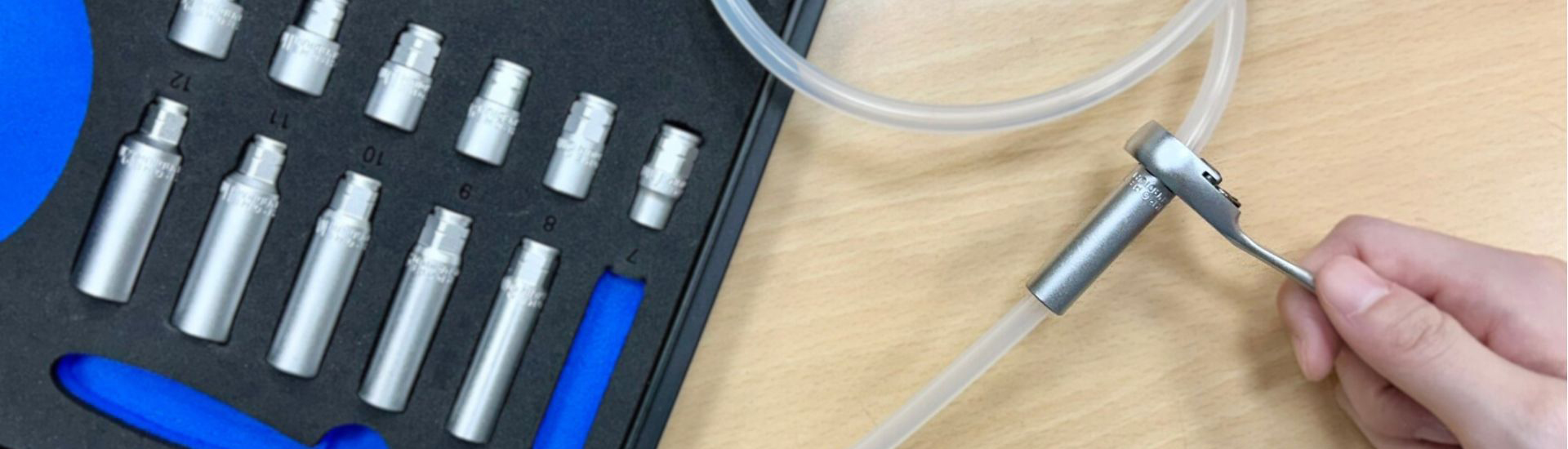
A super short socket reduces that extra height. When paired with a compact wrench or ratchet, it creates a lower-profile tool system that can access fasteners in places where standard sockets struggle.
This difference is especially important in:
- fasteners near the firewall
- underbody mounting points
- brake and suspension service
- dashboard and seat rail fasteners
- compact engine covers and side cases
So while both socket types perform the same core function, the super short socket is built to improve clearance and accessibility.
Access in Tight Spaces
If the job involves open space and easy tool movement, a standard socket is often sufficient. But if the fastener is surrounded by hoses, brackets, covers, or structural components, a standard socket may become difficult to use.
This is where a super short socket has a clear advantage.
Because of its lower profile, it can:
- fit into tighter working areas
- reduce interference with nearby components
- improve tool positioning
- make it easier to work in low-clearance angles
In modern repair work, this matters more than ever. Vehicles and machinery are becoming more compact, which means service tools also need to become more compact.
Torque and Strength Considerations
A common question is whether a super short socket is weaker than a standard socket.
In principle, both are designed for torque transmission. The difference is not that one is automatically “weak” and the other “strong,” but rather that they are optimized for different working conditions. A quality super short socket should still provide dependable torque performance for its intended application.
At ACT TOOLS, compactness is not treated as a cosmetic feature. It is paired with product development focused on compact design, high torque performance, and multifunctional integration. You can explore related products in our ACT Insert-Snap Series and browse the broader product range here.
So, the more accurate comparison is this:
- Standard socket: better known as the all-purpose default choice
- Super short socket: optimized for tight-space efficiency without sacrificing professional usability
When a Standard Socket Makes More Sense
A standard socket is often the better choice when:
- there is enough working space
- height is not a concern
- the technician wants a more traditional setup
- the job is general-purpose and repeated across open service areas
For example, in open chassis work, simple bench tasks, or common fasteners with no surrounding interference, a standard socket is completely practical.
This is why professional tool kits still need standard sockets. They remain an essential foundation.
When a Super Short Socket Makes More Sense
A super short socket becomes the better option when:
- access is limited
- the socket-and-ratchet combination is too tall
- nearby parts restrict tool movement
- the technician wants a more compact setup
- repeated work in confined areas demands faster positioning
This is especially true in:
- automotive engine bay repair
- brake and suspension maintenance
- interior and dashboard fastening
- motorcycle and powersports service
- industrial maintenance in restricted assemblies
In these cases, the super short socket is not just “smaller.” It is a more effective solution.
Which One Is Better for Professional Tool Kits?
The best professional answer is not to replace one with the other completely. Instead, workshops benefit most by using both.
A standard socket covers broad day-to-day work. A super short socket covers difficult access situations where a normal setup becomes inefficient.
That is why many professionals see super short sockets as a specialized upgrade to a complete tool system rather than a total replacement for standard sockets.
For ACT TOOLS, this logic fits directly into the design of the ACT Insert-Snap Series. When super short sockets are combined with compact insert-snap wrench systems, the result is a lower-profile, more flexible fastening solution for tight-space applications.
Why This Difference Matters More Today
The difference between super short sockets and standard sockets matters more now than it did in the past because repair environments have changed.
Modern service work increasingly involves:
- denser vehicle packaging
- more limited tool clearance
- more mixed fastener types
- higher expectations for efficiency
- tighter working windows in professional shops
As a result, technicians are no longer choosing tools only by drive size and socket size. They are also choosing based on profile, access, and workflow efficiency.
That is exactly why super short sockets continue to gain attention in professional repair environments.
FAQ
Q1. Is a super short socket stronger than a standard socket?
Not necessarily. The difference is mainly in profile and application. A standard socket is a general-purpose choice, while a super short socket is optimized for restricted-access work. A well-made super short socket should still provide dependable torque performance for professional use.
Q2. Should I replace all standard sockets with super short sockets?
No. Most professional users benefit from keeping both. Standard sockets remain essential for open working areas, while super short sockets are most valuable when clearance is limited.
Q3. Where are super short sockets most useful?
They are especially useful in engine bays, suspension service, brake-related work, dashboard fastening, motorcycle maintenance, and machinery repair where standard socket height becomes a limitation.
Q4. Do super short sockets work well with insert-snap wrench systems?
Yes. In fact, pairing super short sockets with compact insert-snap wrench systems is one of the most effective ways to build a lower-profile tool setup for tight-space repair work.
Q5. Where can I learn more about ACT TOOLS products and testing?
You can explore the ACT Insert-Snap Series, view the full Products page, read more about the company on the About page, or review available Test Reports.
Height is not the only factor to consider. If a socket will be driven by an impact wrench, its material and wall design matter just as much. Learn more in Impact Socket vs Chrome Socket: Differences, Materials, and How to Choose.
Conclusion
So, what is the difference between a super short socket and a standard socket?
The answer comes down to profile, access, and application.
A standard socket is the reliable general-purpose choice for common service work. A super short socket is the compact solution for tight spaces where a standard setup becomes too tall or too bulky. Both have value, but they solve different problems.
For today’s technicians, especially those working in automotive, motorcycle, and industrial maintenance, understanding that difference leads to smarter tool selection and more efficient repair work.
Contact ACT TOOLS for Compact Socket Solutions
If you are looking for a practical compact socket solution for tight-space maintenance, ACT TOOLS is ready to help. From the ACT Insert-Snap Series to our broader product lineup, we provide professional tool systems designed for modern repair environments.
Visit our company page to learn more about ACT Quality Industrial Co., Ltd., or explore our Test Report page if you want to review available technical documentation and product verification materials.