2026-08-13
How to Build a Complete Tight-Space Socket System: A Practical Guide from a Professional Hand Tools Manufacturer
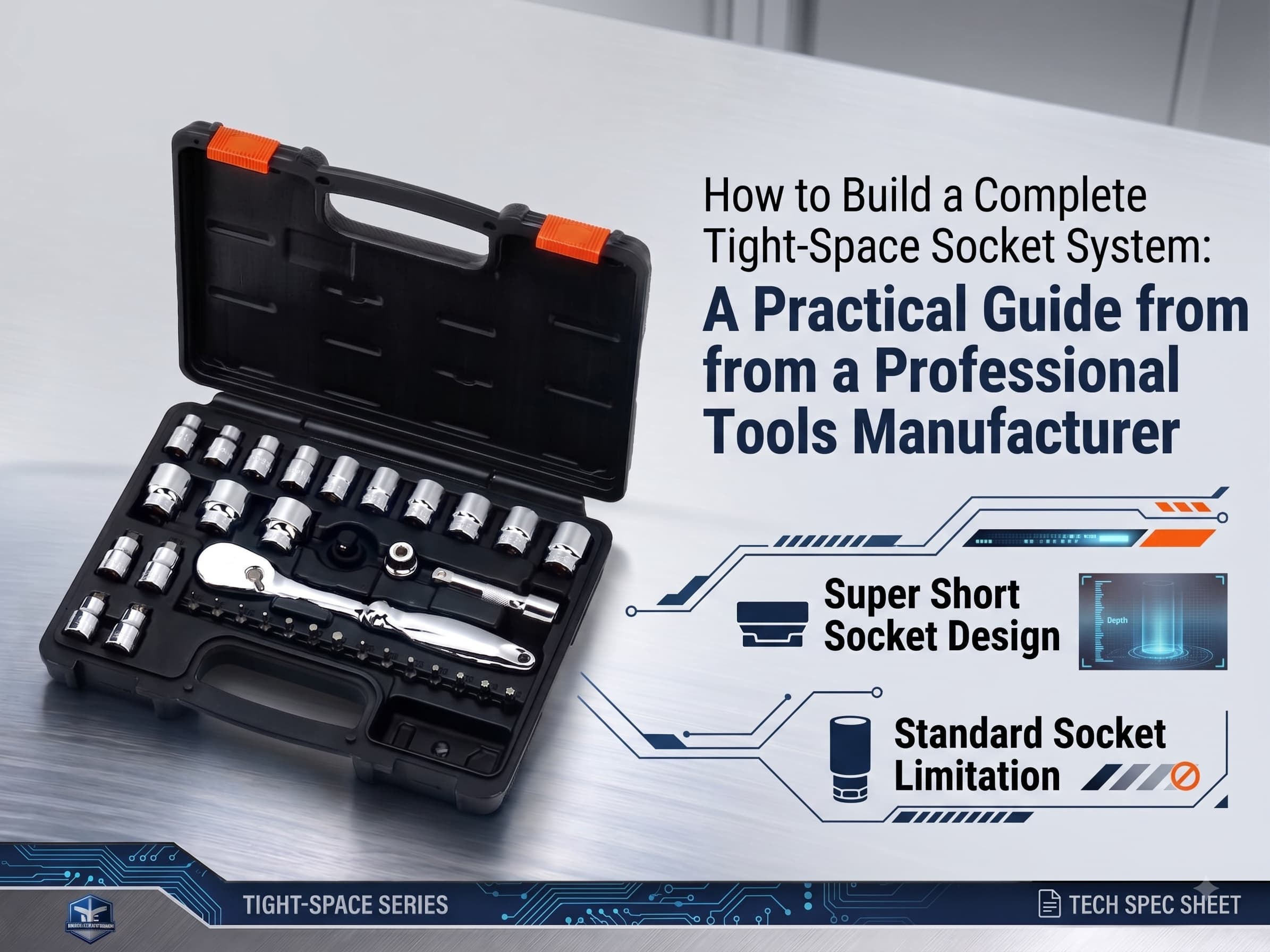
In our previous article, Super Short Socket vs. Standard Socket: What's the Difference?, we explained how these two socket types serve different purposes depending on access and clearance. But knowing the difference is only the first step. The real question professional technicians face is how to combine these tools into one efficient, reliable system that performs well across an entire workshop's daily needs.
As a hand tools manufacturer focused on compact fastening solutions, ACT TOOLS approaches this question from a product design perspective — not just tool selection, but tool system architecture.
Why a Single Socket Type Is Never Enough
No workshop can rely on one socket profile alone. General service work still calls for standard sockets, while modern vehicles and machinery increasingly demand compact, low-profile alternatives. A well-planned tool system treats these as complementary layers rather than competing options.
This is one of the reasons professional buyers increasingly evaluate a hand tools manufacturer not just on individual product specs, but on how well its entire product line works together as a system.
Core Components of a Tight-Space Socket System
1. Standard Sockets for Everyday Coverage
Standard sockets remain the backbone of most tool kits. They handle open-area fastening reliably and are compatible with common ratchets, breaker bars, and extensions.
2. Super Short Sockets for Restricted Access
Low-profile sockets reduce overall setup height, allowing technicians to reach fasteners near firewalls, underbody mounts, and other confined zones without switching to specialty tools.
3. Insert-Snap Wrench Systems for Flexibility
Pairing super short sockets with insert-snap wrench systems — such as ACT TOOLS' ACT Insert-Snap Series — creates a modular setup. Technicians can switch socket heads quickly without carrying multiple separate tools, improving both speed and workspace efficiency.
How Professional Hand Tools Manufacturers Approach Compact Design
Compactness alone is not the goal; maintaining torque reliability while reducing size is the real engineering challenge. A responsible hand tools manufacturer typically addresses this through several considerations:
- material selection and heat treatment for strength retention despite reduced socket height
- precision manufacturing tolerances to preserve secure engagement with fasteners
- product testing and verification, often documented through third-party test reports
- modular product architecture that allows components to work across multiple use cases
This is why sourcing from an established hand tools manufacturer — rather than assembling mismatched tools from multiple low-cost sources — often results in a more dependable long-term tool system.
Matching the System to the Application
| Work Scenario | Recommended Tool Combination |
|---|---|
| Open chassis or bench work | Standard sockets |
| Engine bay, suspension, brake service | Super short sockets |
| Repeated switching between fastener types | Super short socket + insert-snap wrench |
| Motorcycle and powersports maintenance | Compact insert-snap system |
| Industrial equipment in restricted assemblies | Low-profile socket combination |
Evaluating a Hand Tools Manufacturer Before You Buy
When selecting a long-term tooling partner, professional buyers should look beyond price and consider whether the manufacturer offers a genuinely integrated product range, transparent test documentation, consistent sizing across product lines, and responsive technical support for industrial or automotive-specific applications. These factors distinguish a serious hand tools manufacturer from a generic tool reseller.
FAQ
Q1. Do I need to replace my standard sockets if I add super short sockets?
No. Most professional setups keep both, using super short sockets specifically for restricted-access situations.
Q2. Is an insert-snap wrench system compatible with existing sockets?
Compatibility depends on the manufacturer's design. Systems like the ACT Insert-Snap Series are built to integrate directly with compact socket heads for modular use.
Q3. How do I verify the quality of a hand tools manufacturer's products?
Look for documented test reports, consistent manufacturing standards, and clear technical specifications rather than relying on price alone.
When your tight-space system also includes power tools, every socket and accessory in the drive chain should be impact-rated. See Impact Socket vs Chrome Socket: Differences, Materials, and How to Choose to learn how to tell the two types apart.
Conclusion
Building an efficient tight-space socket system is not about choosing one tool over another — it's about understanding how standard sockets, super short sockets, and modular wrench systems work together. Partnering with an experienced hand tools manufacturer that designs its product lines as an integrated system, rather than isolated items, gives professional technicians a meaningful advantage in speed, reliability, and long-term tool investment.
To explore compact, professional-grade fastening solutions, visit the ACT Insert-Snap Series or browse the full product range from ACT TOOLS, a Taiwan-based hand tools manufacturer serving automotive, motorcycle, and industrial maintenance professionals worldwide.