2026-09-17
Impact Socket vs Chrome Socket: Differences, Materials, and How to Choose
Walk into any professional workshop and you will find two families of sockets on the bench: bright, mirror-polished chrome sockets and matte black impact sockets. At first glance they do the same job. Both have a square drive on one end and a hex or bi-hex opening on the other, and both turn nuts and bolts. Yet using the wrong one can cost you a stripped fastener, a broken tool, or in the worst case an injury.
As a Taiwan hand tool manufacturer with roots going back to 1996, ACT Quality Industrial Co., Ltd. is often asked by distributors and technicians the same question: what is the real difference, and does it matter? The short answer is yes. The two sockets are engineered for completely different kinds of load. This guide explains the differences in steel, heat treatment, wall design, finish and standards, then shows you how to choose the right socket for each application.
The Quick Answer: Impact Socket vs Chrome Socket at a Glance
If you only have a minute, this table summarizes the key differences.
| Feature | Chrome (Hand) Socket | Impact Socket |
|---|---|---|
| Intended tool | Ratchets, breaker bars, torque wrenches | Air, electric and cordless impact wrenches |
| Typical steel | Chrome vanadium (Cr-V) | Chrome molybdenum (Cr-Mo) |
| Heat treatment goal | High hardness and rigidity | Toughness and shock absorption |
| Wall thickness | Thinner | Thicker |
| Typical finish | Nickel-chrome plating, mirror or satin | Manganese phosphate or black oxide |
| Retention features | Usually none | Cross hole for pin, groove for O-ring |
| Common point design | 6-point and 12-point | Mostly 6-point |
| Main failure risk if misused | Cracking or shattering under impact | Slightly bulkier for tight spaces |
In simple terms: chrome sockets are made to be hard, impact sockets are made to be tough. Hardness resists wear and deformation under steady force. Toughness resists cracking under sudden, repeated blows. An impact wrench delivers exactly that kind of repeated blow, which is why the two cannot be treated as interchangeable.
What Is a Chrome Socket?
A chrome socket, also called a hand socket or standard socket, is designed for manual tools such as ratchet handles, breaker bars, speed handles and torque wrenches. When you pull a ratchet, torque builds up smoothly and relatively slowly. The socket needs to resist that steady twisting force without spreading at the hex corners and without wearing down after thousands of cycles.
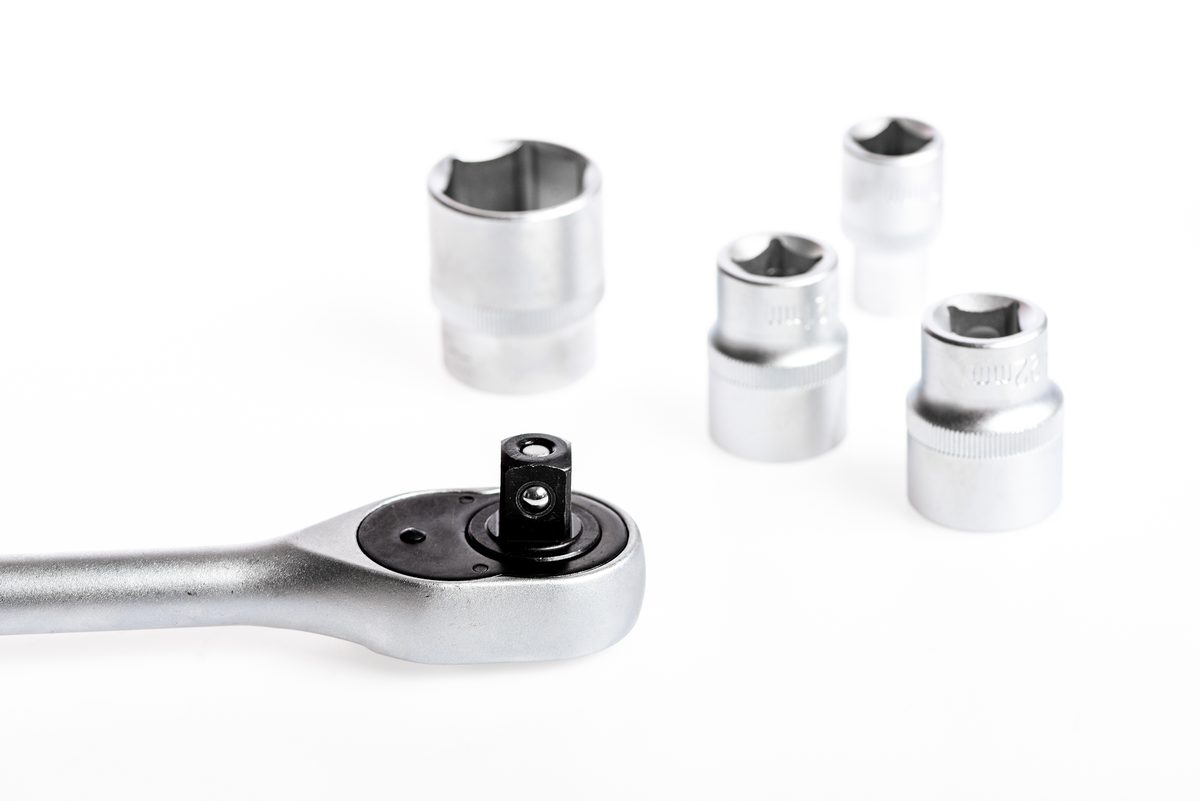
To achieve this, manufacturers generally use chrome vanadium steel heat-treated to a relatively high hardness. A harder socket keeps its hex geometry accurate over time, which means a precise fit on the fastener and less risk of rounding bolt heads.
Because a chrome socket does not have to survive hammer-like blows, its walls can be thinner. That is a major advantage in real work. Thin walls let the socket slip into recessed bolt pockets, reach nuts beside brackets and hoses, and fit between closely spaced fasteners. This is the reason chrome sockets remain the first choice for engine bays, interior trim, HVAC equipment, machinery panels and most precision assembly.
Chrome sockets are usually finished with nickel-chrome plating. The plating protects the steel from rust, makes the tool easy to wipe clean of oil and grease, and gives the familiar mirror or satin appearance. Many professional sets, such as ACT’s 24PCS 1/2″ Dr. 6-Point Socket Set and 24PCS 1/2″ Dr. 12-Point Socket Set, combine mirror-polished Cr-V sockets with a ratchet and extensions for everyday workshop use.
What Is an Impact Socket?
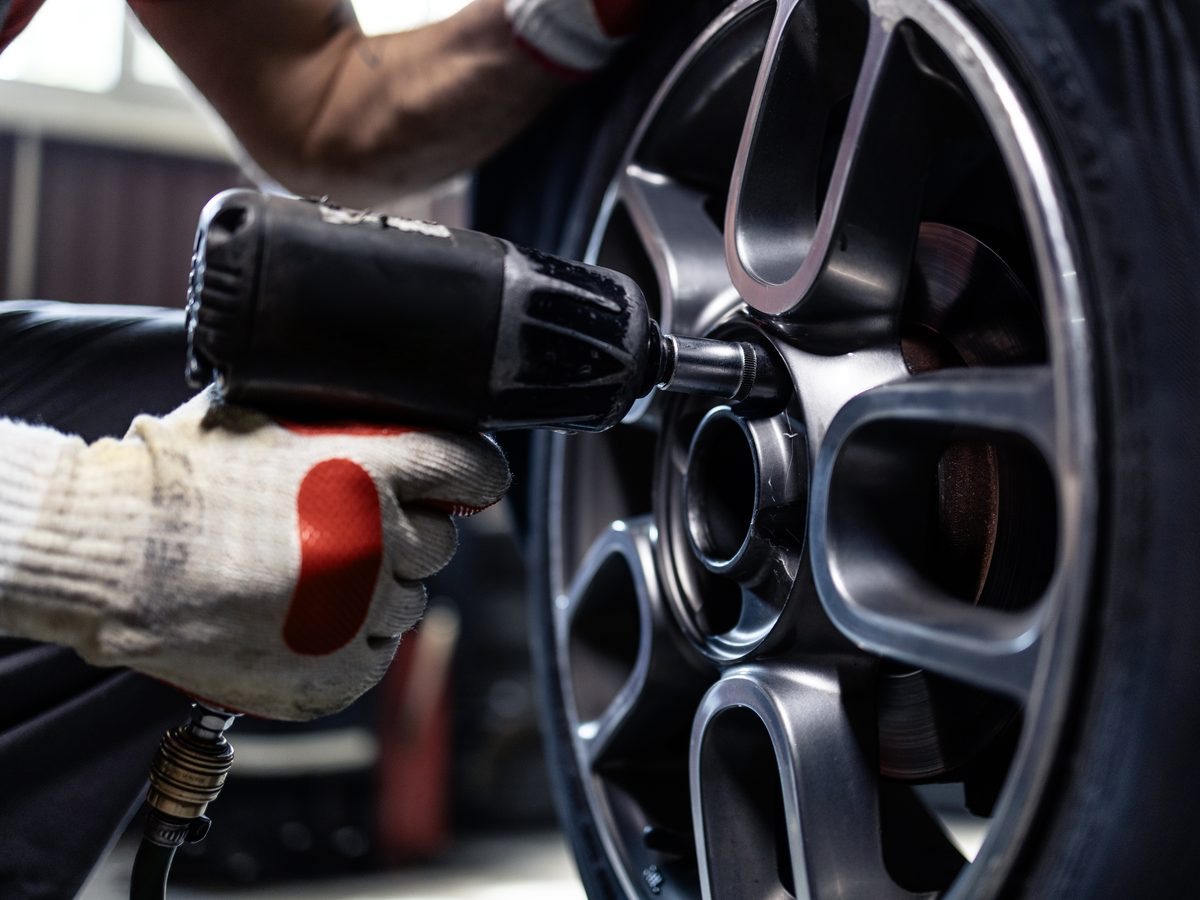
An impact socket is built for power tools that deliver torque in rapid rotational hammer blows. Inside an impact wrench, a spinning hammer mechanism strikes an anvil many times per second. Each strike sends a short, intense shock through the anvil, into the socket, and on to the fastener. This is what allows a compact impact wrench to break loose seized wheel nuts or suspension bolts that would require a long breaker bar by hand.
That repeated shock loading is the key design problem. A socket that is too hard behaves like glass under these conditions. It resists bending right up to the moment it cracks. An impact socket therefore uses a steel and heat treatment that allow it to absorb energy and flex very slightly, then return to shape, again and again.
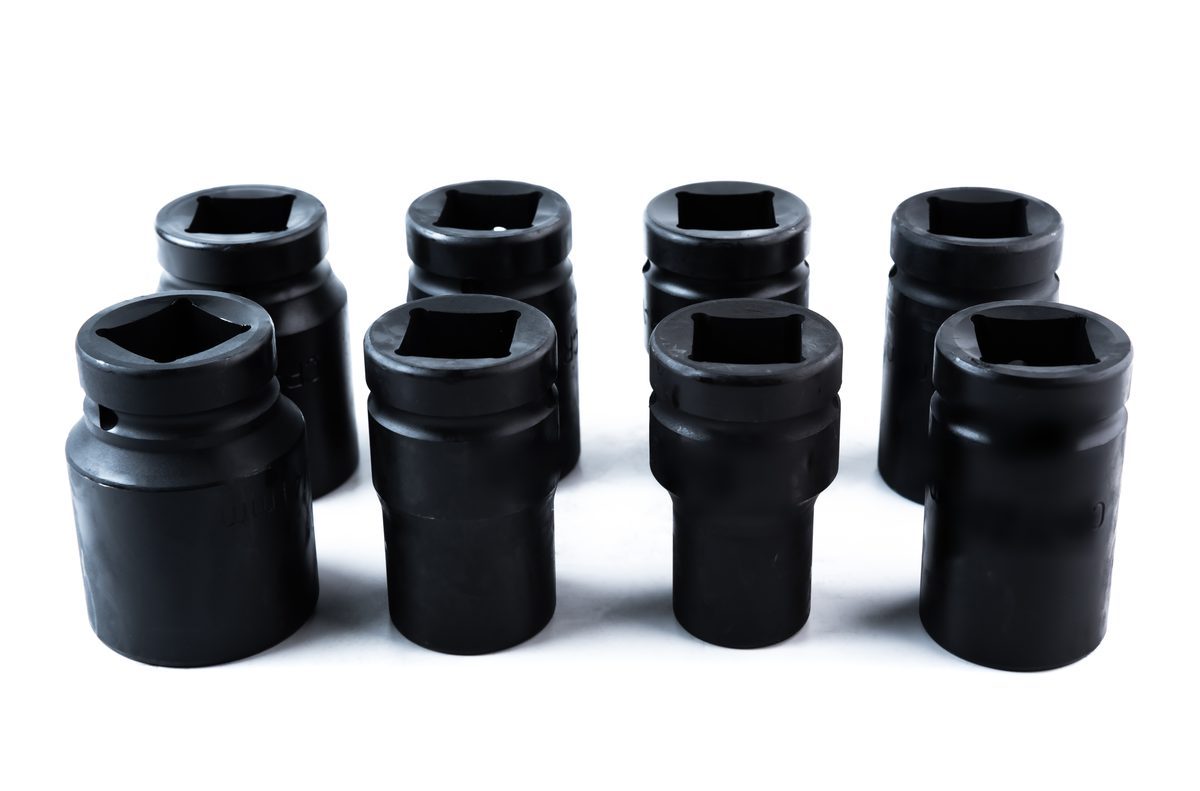
Most impact sockets are made from chrome molybdenum steel, tempered to prioritize toughness. They have noticeably thicker walls to spread the stress, and they are finished with a matte black coating such as manganese phosphate or black oxide instead of chrome plating. Most also include a cross hole and an external groove so the socket can be locked onto the impact wrench anvil with a retaining pin and O-ring.
7 Key Differences Explained
1. Steel: Chrome Vanadium vs Chrome Molybdenum
The material is where the difference begins.
Chrome vanadium (Cr-V) steel contains chromium for hardenability and corrosion resistance, and a small amount of vanadium that refines the grain structure. Once heat-treated, Cr-V offers excellent hardness and wear resistance, which makes it well suited to hand sockets, wrenches and ratchet components.
Chrome molybdenum (Cr-Mo) steel replaces vanadium with molybdenum. Molybdenum allows the steel to be tempered at higher temperatures while keeping good strength. The result is a microstructure with better impact toughness and fatigue resistance, which is exactly what a socket needs when it is struck thousands of times during its service life.
It is worth noting that “Cr-V” and “Cr-Mo” describe alloy families rather than one exact recipe. Two sockets both labelled Cr-Mo can perform very differently depending on the exact grade, forging quality and heat treatment. For buyers, the material label is a starting point, not a guarantee.
2. Heat Treatment and Hardness
Heat treatment decides how the steel actually behaves. Chrome sockets are hardened and tempered to a higher hardness to maximize rigidity and wear resistance. Impact sockets are tempered to a somewhat lower hardness range so that the material stays ductile.
Industry sources commonly describe Cr-V hand tools in roughly the high-30s to mid-40s HRC range and Cr-Mo impact tools a few points lower, although exact values vary by manufacturer and standard. The point is not a single number, but the balance: too soft and the hex opening wears and spreads, too hard and the socket becomes brittle. A good manufacturer controls quenching and tempering precisely so every batch lands in the right window for its intended use.
3. Wall Thickness and Weight
Impact sockets have thicker walls, especially around the hex opening and at the transition to the square drive, where stress concentrates. Extra material spreads the shock load and reduces the chance of cracks starting at sharp corners.
The trade-off is size and weight. For the same hex size, an impact socket has a larger outside diameter and weighs more than a chrome socket. In open areas such as wheel hubs this makes no difference, but in a crowded engine bay or next to a bracket, a few millimeters of extra wall can decide whether the socket fits at all.
4. Surface Finish: Chrome Plating vs Manganese Phosphate
The finish is not only cosmetic. It is also the fastest way to tell the two sockets apart.
Chrome plating is very hard and very smooth. It resists corrosion and cleans easily, which is ideal for hand tools. However, the plating layer itself is brittle. Under repeated impact it can crack and flake, and small flakes of plating are a real hazard in a workshop.
Manganese phosphate and black oxide finishes are matte coatings that bond into the steel surface rather than forming a hard shell on top of it. They do not flake under shock, they hold a light film of oil for rust protection, and the dark color clearly marks the tool as impact-rated. This visual code matters on a busy shop floor, where technicians grab tools quickly and a clear color difference helps prevent mistakes.
5. Retention Features: Pin Hole and O-Ring Groove
Impact wrenches spin fast and vibrate hard. A socket that works loose can fall into an engine bay or fly off the anvil. Many impact wrenches use a friction ring on the anvil to hold the socket, while others use a detent pin. For the most secure connection, impact sockets include a cross hole through the drive end and an external groove. A retaining pin passes through the socket and anvil, and a rubber O-ring sits in the groove to keep the pin in place.
This system is common on 3/4″ and 1″ drive heavy-duty sockets and on production lines where a socket may stay on the same tool for an entire shift. Chrome sockets normally do not need these features, although some use a ball detent recess in the drive square.
6. Point Design: 6-Point vs 12-Point
Chrome sockets are widely available in both 6-point and 12-point versions. A 12-point socket is easier to align on a fastener in tight spaces, because it only needs to rotate 30 degrees to find the next engagement position.
Impact sockets, on the other hand, are overwhelmingly 6-point. A 6-point opening contacts the flats of the fastener rather than the corners, spreading the high, pulsing load over a larger area. This reduces the risk of rounding the fastener and reduces stress on the socket itself. For impact work, 6-point is almost always the right choice. If you are unsure whether a 6-point or 12-point chrome socket suits your hand-tool application, compare them side by side on the job: 6-point for maximum grip on stubborn fasteners, 12-point for faster alignment in restricted swing space.
7. Standards and Testing
Professional sockets are designed and tested to recognized standards, and impact and hand sockets are covered by separate specifications. Useful references include:
- ISO 2725-1 (hand-operated square drive sockets, dimensions) and ISO 2725-2 (machine-operated impact sockets, dimensions)
- ISO 1711-1 (technical specifications for hand-operated wrenches and sockets) and ISO 1711-2 (technical specifications for machine-operated impact sockets)
- DIN 3124 (hand-operated socket wrenches) and DIN 3129 (impact socket wrenches), still widely referenced in European markets
- ASME B107.110, which consolidates earlier American standards including B107.1 (hand sockets) and B107.2 (power drive impact sockets)
These standards define dimensions, tolerances, test torques and marking requirements. For example, different standards specify different outside diameters and tolerances for an impact socket of the same hex size, which affects both fit and material weight. When sourcing sockets for a specific market, confirm which standard your customers expect before finalizing the design.
Why You Should Never Use a Chrome Socket on an Impact Wrench
This is the single most important safety point in this article.
A chrome socket is hard and relatively thin-walled. When it is driven by an impact wrench, every hammer blow sends a shock wave through material that was not designed to absorb it. Micro-cracks can form at the hex corners or at the base of the drive square. These cracks may be invisible at first, but they grow with every blow. Eventually the socket can split suddenly, and fragments of hardened steel or chrome plating can be thrown outward at high speed.
Even if the socket does not break, a chrome socket used on an impact wrench tends to deform the drive square, crack the plating, and damage the fastener. The short-term convenience is never worth the risk.
Rule of thumb: if the tool is powered and it hammers, use an impact socket. Always wear safety glasses when using impact tools, and retire any socket that shows cracks, a deformed drive opening or flaking finish.
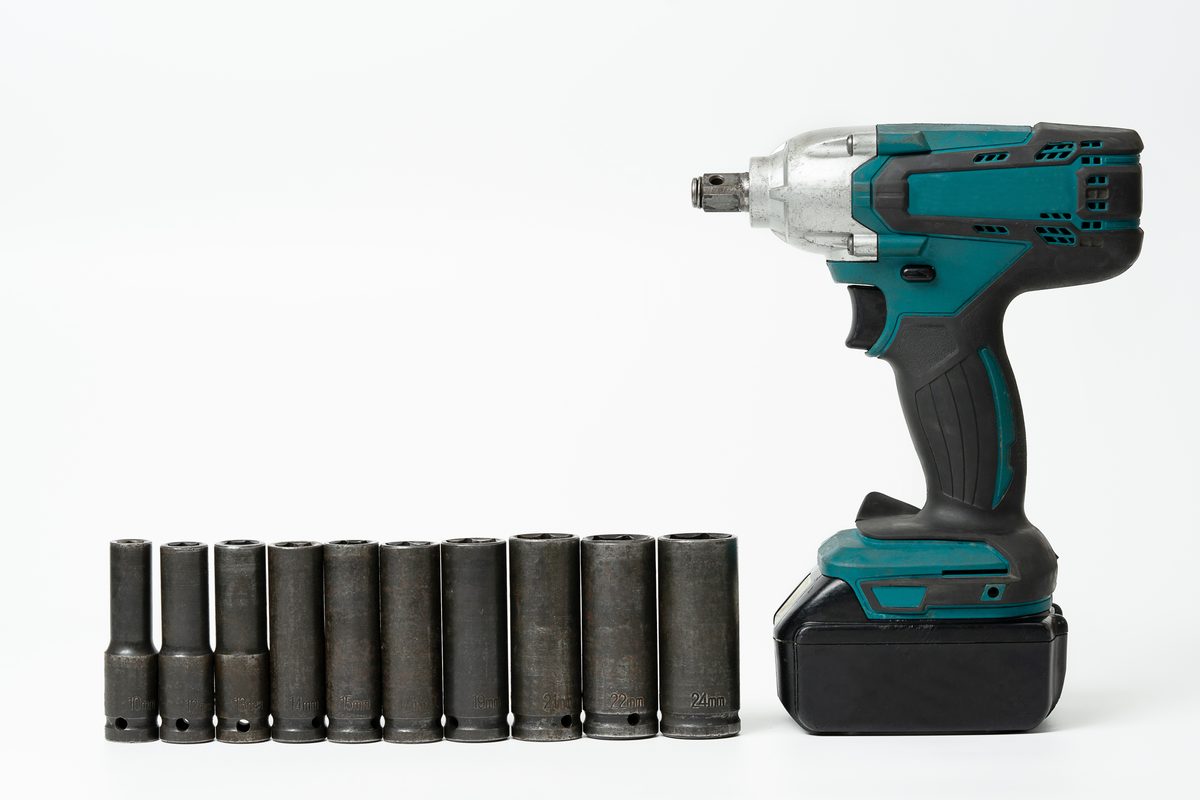
Can You Use an Impact Socket on a Hand Ratchet or Torque Wrench?
Yes. Using an impact socket with a hand ratchet, breaker bar or torque wrench is safe. The tougher Cr-Mo material and thicker walls can easily handle manual torque, and many technicians loosen stubborn bolts by hand with an impact socket before running them off with a power tool.
There are only two practical limitations:
- Size and access. The thicker wall may not fit into recessed pockets or narrow gaps where a thin-wall chrome socket would.
- Weight and balance. A heavier socket makes a small 1/4″ or 3/8″ ratchet feel less nimble for fine assembly work.
So the rule only runs one way. Impact sockets can be used by hand, but chrome sockets should never be used on impact tools.
Don’t Forget the Accessories: Extensions, Universal Joints and Adapters
A drive chain is only as strong as its weakest link. Many socket failures in impact work do not start in the socket at all. They begin in a chrome extension bar, a standard universal joint or a hand-rated adapter that was placed between the impact wrench and an impact socket.
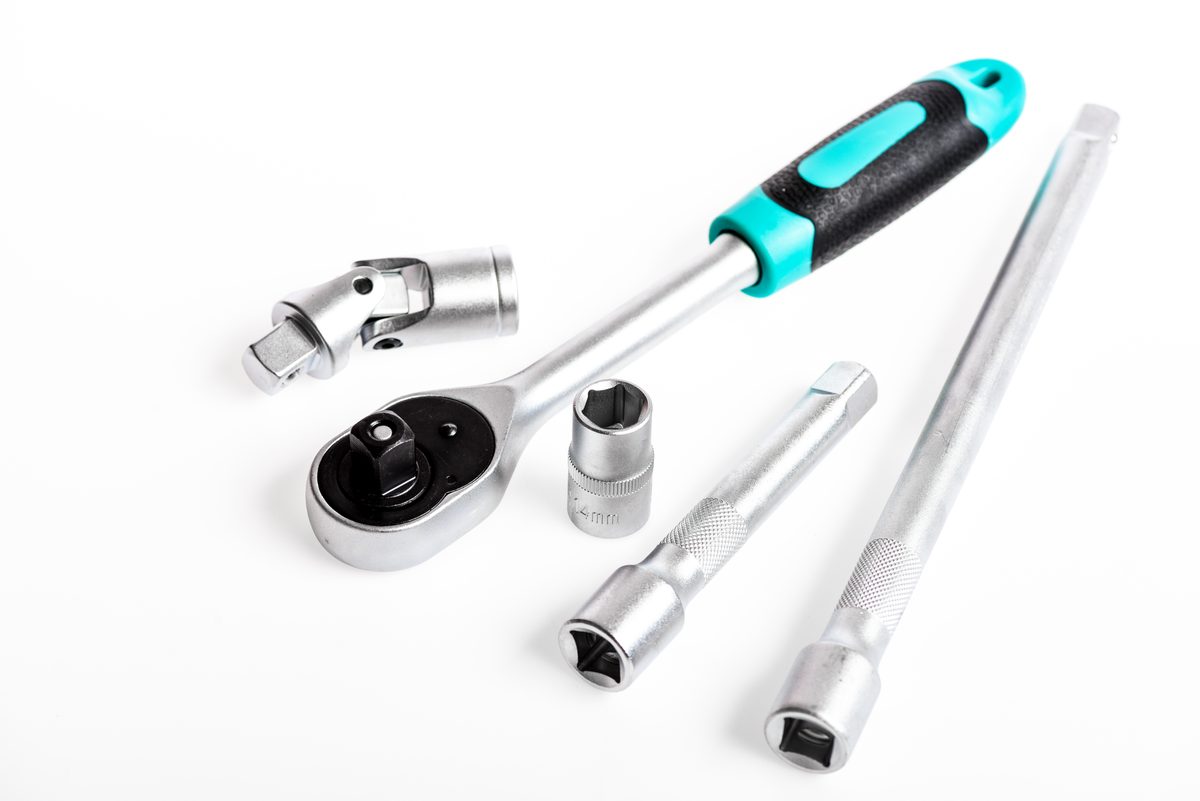
Hand-rated extensions and universal joints shown. Use impact-rated versions with power tools.
When using an impact wrench, make sure every component in the chain is impact-rated:
- Extensions: use impact extensions made from tough steel with a matching black finish.
- Universal joints: use impact universal joints. Standard ball-and-pin UJs are not designed for pulsing loads and can break or throw pins.
- Adapters and reducers: a 1/2″ to 3/8″ adapter used on an impact wrench must be impact-rated. Stepping down the drive size also concentrates torque on a smaller square, so choose the reducer carefully.
- Quick-release adapters: confirm the locking mechanism is rated for impact use before running it on a power tool.
Super Short Impact Sockets for Tight Spaces
One of the classic complaints about impact sockets is that they are too big for confined work. Engine compartments, suspension components, motorcycles and compact machinery often leave very little clearance between the fastener and the surrounding parts. Stacking an impact wrench, adapter and standard-length impact socket can easily add too much height.
This is where super short impact sockets make a difference. By reducing the overall socket length while keeping impact-grade material and wall design, they lower the total stack height and bring the tool closer to the work. ACT’s Super Short Impact Socket with Color Ring is made from Cr-Mo steel with a manganese phosphate finish, available in 17H (3/8″ Dr.) and 22H (1/2″ Dr.) formats. Color rings make it quick to identify sizes in the tray, and the sockets are compatible with O-rings and traditional wrenches for flexible use.
If you want to understand when a low-profile socket is the better choice in general, read our guides What Is a Super Short Socket and When Should You Use It? and Super Short Socket vs. Standard Socket.
How to Choose: Impact or Chrome for Your Application
Use the following guide as a practical starting point.
| Application | Recommended Socket | Why |
|---|---|---|
| Tire service, wheel nuts and hub bolts | Impact socket, 6-point, often thin-wall wheel type | Repeated power tool use on high-torque fasteners |
| Suspension, subframe and exhaust work | Impact socket, deep or super short as needed | Seized and rusted fasteners, power tools common |
| Engine bay assembly and trim | Chrome socket, 6- or 12-point | Tight access, moderate torque, precise fit |
| Final tightening to specification | Chrome or impact socket on a torque wrench | Manual torque control; fit and access decide |
| Production line with pneumatic or electric nutrunners | Impact-rated sockets with pin and O-ring where required | Continuous power tool cycles |
| HVAC, electrical cabinets and light machinery | Chrome socket, often 1/4″ or 3/8″ drive | Small fasteners, clearance, cleanability |
| Motorcycle and powersports service | Chrome for hand work, super short impact for power tools | Compact frames and limited clearance |
| Mobile service and roadside kits | Mixed set, clearly color-coded | Versatility with visual separation |
Two final questions help avoid mistakes:
- Will any powered, hammering tool ever touch this socket? If yes, buy impact.
- Is clearance the main problem? If yes and the work is manual, a thin-wall chrome socket is usually better. If the work is powered, consider a super short impact socket.
Inspection and Maintenance Tips
Good sockets last for years when they are looked after:
- Inspect regularly. Check the hex opening for rounding or spreading, the drive square for deformation, and the walls for hairline cracks, especially on impact sockets.
- Keep them clean and lightly oiled. Manganese phosphate holds oil well, which helps prevent rust in humid workshops. Wipe chrome sockets clean after use so grease and grit do not build up inside the hex opening.
- Replace worn O-rings and pins. A tired O-ring allows the pin to walk out, and the socket may come loose.
- Store by type. Keep impact and chrome sockets in separate rails or trays. Clear separation reduces the chance of a chrome socket ending up on an impact wrench.
- Retire damaged tools. Never grind, weld or heat a cracked socket to repair it. Replace it.
A Buyer’s Checklist for Distributors and OEM Brands
If you are sourcing sockets for your own brand or distribution network, the differences above translate into concrete specifications. Before placing an order, clarify the following with your manufacturer:
- Steel grade for each socket type, for example Cr-V for hand sockets and Cr-Mo for impact sockets.
- Hardness range after heat treatment, and how it is tested and recorded for each batch.
- Applicable standard, such as ISO, DIN or ASME, and whether proof torque testing is performed.
- Dimensions, including outside diameter, length and wall thickness, especially for thin-wall or super short designs.
- Finish and corrosion requirements, such as mirror polish, satin chrome, manganese phosphate or black oxide.
- Retention features, including pin holes, O-ring grooves or ball detent recesses.
- Marking, such as size stamping, laser marking, color rings or your own logo.
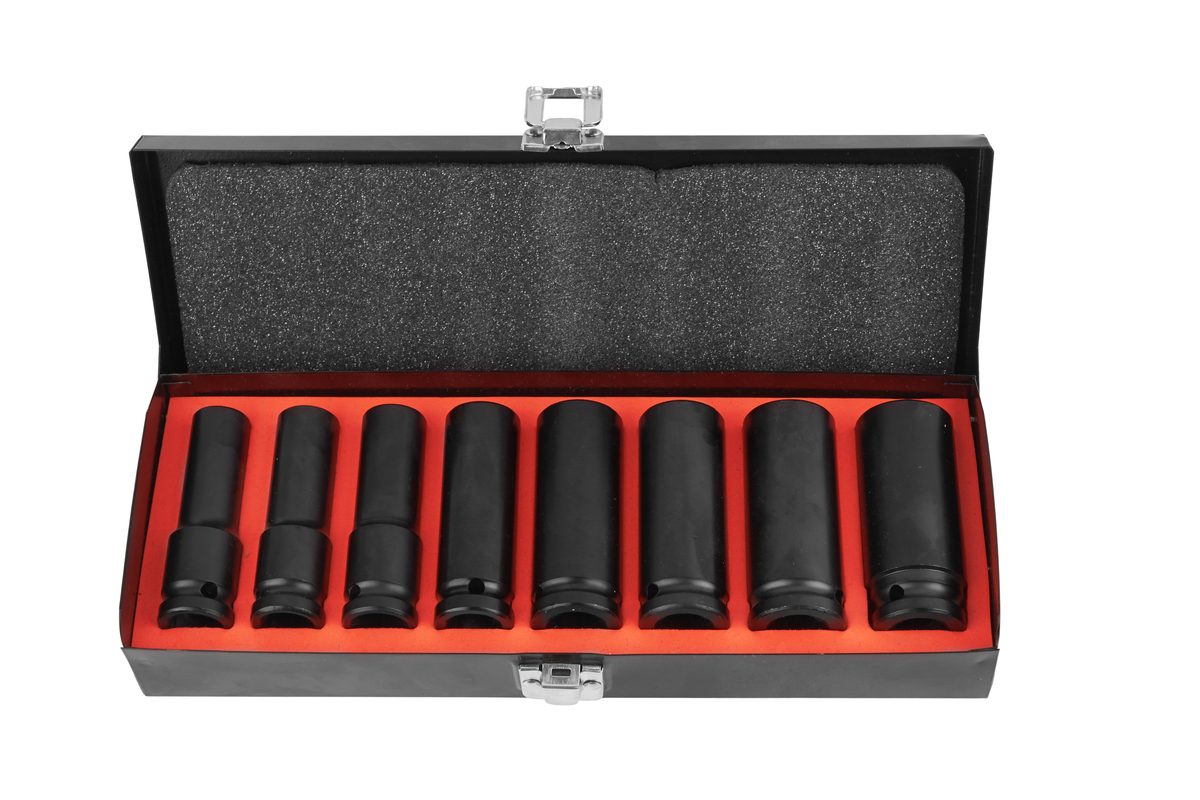
- Packaging, from bulk and plastic holders to blow mold cases, metal boxes and retail color sleeves.
As a Taiwan-based manufacturer, ACT supports OEM and ODM projects covering chrome sockets, impact sockets, bit sockets, E-sockets and complete socket sets, with packaging options tailored to your market. Explore our Socket Wrench Set and OEM Tools categories to see current examples.
Frequently Asked Questions
Why are impact sockets black?
Impact sockets are usually coated with manganese phosphate or black oxide instead of chrome plating. These finishes do not crack or flake under repeated shock, they hold oil for rust protection, and the dark color makes impact-rated tools easy to recognize.
Are impact sockets stronger than chrome sockets?
They are tougher, not necessarily harder. Chrome sockets are harder and resist wear under steady manual torque. Impact sockets are designed to absorb repeated shock loads without cracking. “Stronger” depends on the type of load.
Can I use a chrome socket on a cordless impact driver or impact wrench?
No. Even compact cordless impact tools deliver hammer-style blows. Use impact-rated sockets, extensions and adapters with any impact tool.
Is it OK to use impact sockets with a torque wrench?
Yes. Impact sockets work well with torque wrenches and ratchets. Just check that the thicker wall has enough clearance around the fastener.
Should impact sockets be 6-point or 12-point?
For impact work, choose 6-point. The 6-point design grips the flats of the fastener, spreads the load better and reduces the risk of rounding both the fastener and the socket.
What is the difference between Cr-V and Cr-Mo sockets?
Cr-V (chrome vanadium) is typically heat-treated for high hardness and wear resistance, making it ideal for hand sockets. Cr-Mo (chrome molybdenum) is tempered for toughness and shock resistance, making it the standard choice for impact sockets.
Conclusion
Chrome sockets and impact sockets look similar, but they are built for different forces. Chrome sockets use hard Cr-V steel, thin walls and bright plating for precise, compact manual work. Impact sockets use tough Cr-Mo steel, thicker walls, black finishes and retention features to survive the repeated shock of power tools. Use chrome sockets by hand, use impact sockets on impact tools, keep every accessory in the drive chain impact-rated, and choose super short designs when clearance is tight.
If you are building a socket program for your brand or need a reliable supply of professional chrome or impact sockets, contact ACT Quality Industrial Co., Ltd. Our team can help you select materials, finishes and packaging for your market.